The amount of money a debtor owes that has not yet been paid.

In SAP Business One, the tracking of outstanding amounts is supported by several instruments for Receivables management supported:
- chart of accounts: In the chart of accounts (SKR04 or SKR03 in Germany), accounts are opened for accounts receivable and accounts payable set up to manage the outstanding amount.
- Document typesReceipts such as invoices, credit notes and incoming payments are recorded and linked to the corresponding debtor or creditor accounts. These documents enable outstanding amounts to be tracked and the progress of business processes with customers and suppliers to be traced.
- DunningSAP Business One offers a Dunningthat controls Reminders is generated when customer invoices are overdue. It supports different dunning levels and dunning fees, which can be configured individually.
- Customer balance reportThe customer balance report shows an overview of the outstanding amounts per customer. It enables open items to be analysed and helps to identify potential payment problems.
- Payment trackingIn the payment tracking module, payments received are recorded and linked to the corresponding invoices. This enables payments to be tracked and outstanding amounts to be updated.
- Aging ReportThe aging report shows the overdue receivables according to different maturity periods (e.g. 30, 60, 90 days).
Addons: Add-ons such as the Financial Cockpit of the Versino Financial Suite can be used to obtain an even simpler overview of outstanding amounts.
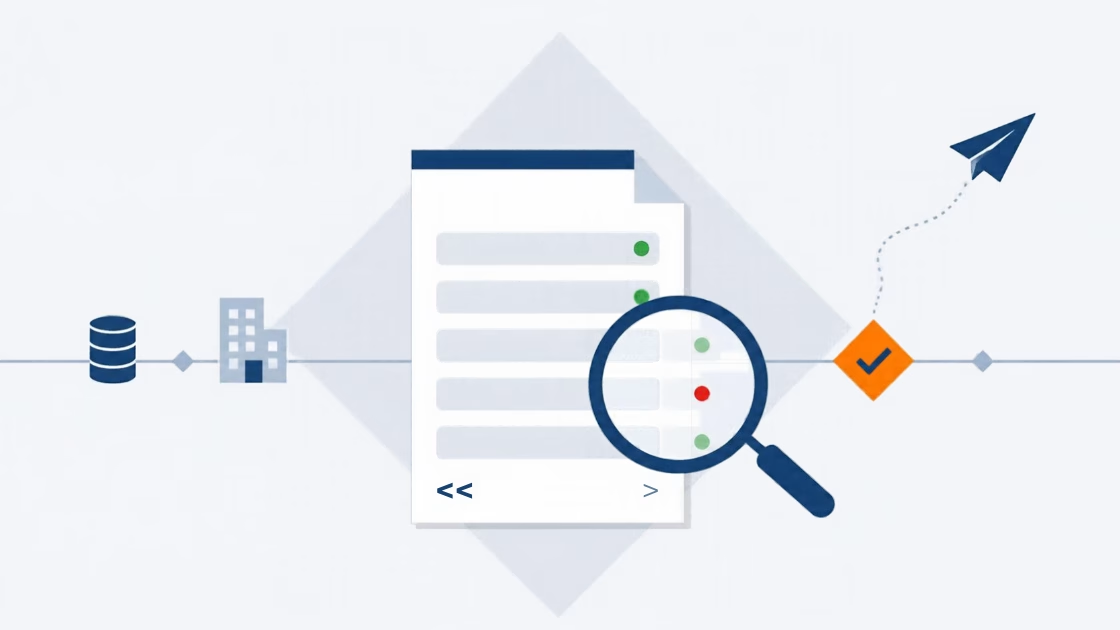
E-Invoice check by Versino Financial Suite
An e-invoice is quickly generated. SAP Business One includes the XRechnung feature as standard, and those who use cks.eINVOICE or the ...

Versino accounting service
Bookkeeping should run quietly. Vouchers come in, are posted, the VAT return goes out, and the tax advisor also gets a ...

Cash flow planning in SAP Business One: What the Versino Financial Suite does differently
Cash flow planning is considered a done deal in many medium-sized companies. After all, there are bank statements, there are open items, ...

Two free webinars in July: Experience the Versino Financial Suite live
In 90-minute sessions, we'll show you practical ways to harmonise, streamline and automate your accounting in SAP Business One….
E-Invoicing 2026: What is changing now for SMEs and SAP B1 users
The e-invoice has moved beyond the theoretical IT project phase. Since January 2025, the obligation to receive e-invoices applies to all domestic companies — ...

Netting in SAP Business One: What makes the Versino Financial Suite different
When a business partner is both a customer and a supplier, that sounds like a comfortable situation. You know each other, you trust...
