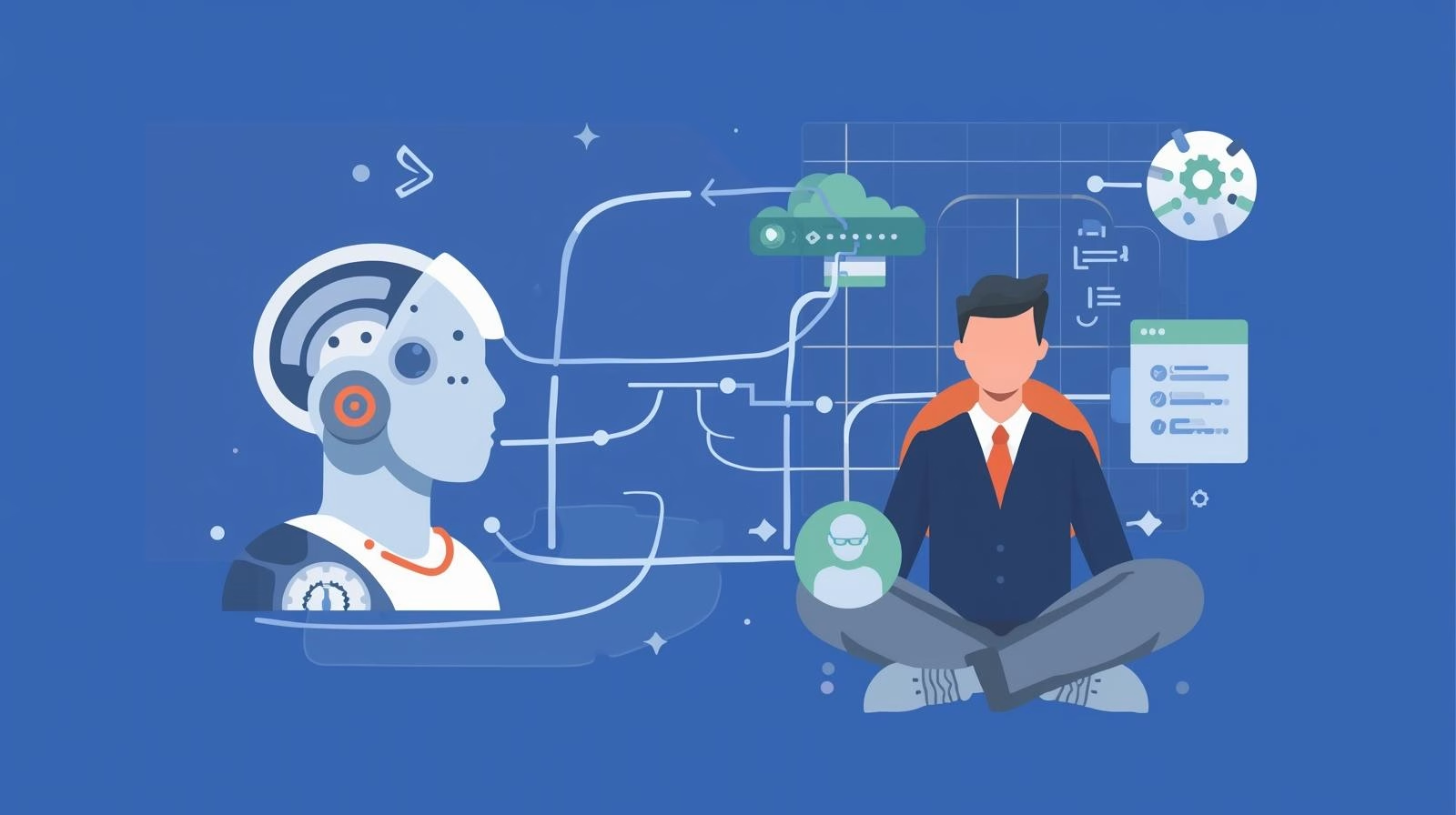
Deep Learning is a subfield of machine learning that works with multilayer artificial neural networks. "Deep" refers to the number of layers, not to the quality of the results. Each layer processes the output of the previous one, becoming more abstract in the process.
An image recognition network demonstrates the principle well: the first layer detects individual pixel contrasts, the next derives edges from these, a further one patterns, and only a later layer recognises a complete object. The network learns these layers itself from large amounts of sample data, without a human defining beforehand which features are important. Classical machine learning usually requires hand-crafted features for this and gets by with smaller amounts of data. Deep Learning dispenses with this manual preparatory work, but in return demands significantly more training data and computing power. This ability to discover features oneself rather than prescribing them is what distinguishes Deep Learning most clearly from classical methods.
Such a network is trained by repeatedly comparing its prediction with the correct answer and adjusting the internal weights in many iterations until the error is small enough. The more layers and parameters a network has, the more computing power and training data this adjustment process requires. Language models such as those behind modern AI assistants are also based on a deep learning architecture, albeit one that processes text rather than images.
Demarcation
Deep learning is a method within machine learning, not its counterpart. Classical machine learning, such as decision trees or linear regression, often remains the faster and more cost-effective choice for structured data and smaller datasets. Deep Learning plays to its strengths where data is unstructured, such as images, spoken language or free text, and where sufficient training material is available.
SAP B1 10.0 FP2608: Service Layer AI as a transactional layer
Process Reward Models: Why a correct result does not yet prove a correct method

Test-Time Compute Scaling: Why a Smaller AI Model Can End Up Winning — and What Supplier Comparison in SAP Business One Has to Do With It

RLHF and reward models: AI hype or what the approval process in SAP Business One has to do with it

AI – Answers from SAP Business One – without SQL, without IT ticket