In financial accounting, the term "general reversal" refers to a reversal posting method used to correct incorrect postings in double-entry bookkeeping. In a general reversal, the cancellation posting is posted on the same page as the original posting, but with a minus sign in front of it. This makes it possible to cancel postings without unnecessarily inflating the annual transaction figures, e.g. by cancelling a debit posting with a credit posting. The general reverse posting is only visible in the journal and in the account sheet and is used to correct posting errors.

In order to use SAP Business One to Cancellation simply confirm the security prompt that appears with "Yes", whereupon the cancellation booking is created. This booking is either inverted or given a negative sign. If you prefer the posting with a negative sign, it is necessary to activate the option "Allow negative amounts for reversal transaction postings" under the path Administration → System initialisation → Company details in the Basic initialisation tab. The advantage of this method is that reversal bookings can be quickly identified in a booking journal due to the negative sign. The cancellation booking is then created by selecting "Add".
If you do not want the cancellation posting to be generally reversed, i.e. posted without the negative sign, deactivate the aforementioned option under the same path. It should be noted that the general reversal, i.e. the cancellation posting with a negative sign, in many cases leads to a clearer and more meaningful accounting especially when it comes to comparisons over several years.
Versino Financial Suite
With the Versino Financial Suite makes general reversals in SAP Business One more convenient, secure and transparent. The suite ensures seamless documentation, automated checks and supports modern, audit-proof accounting.
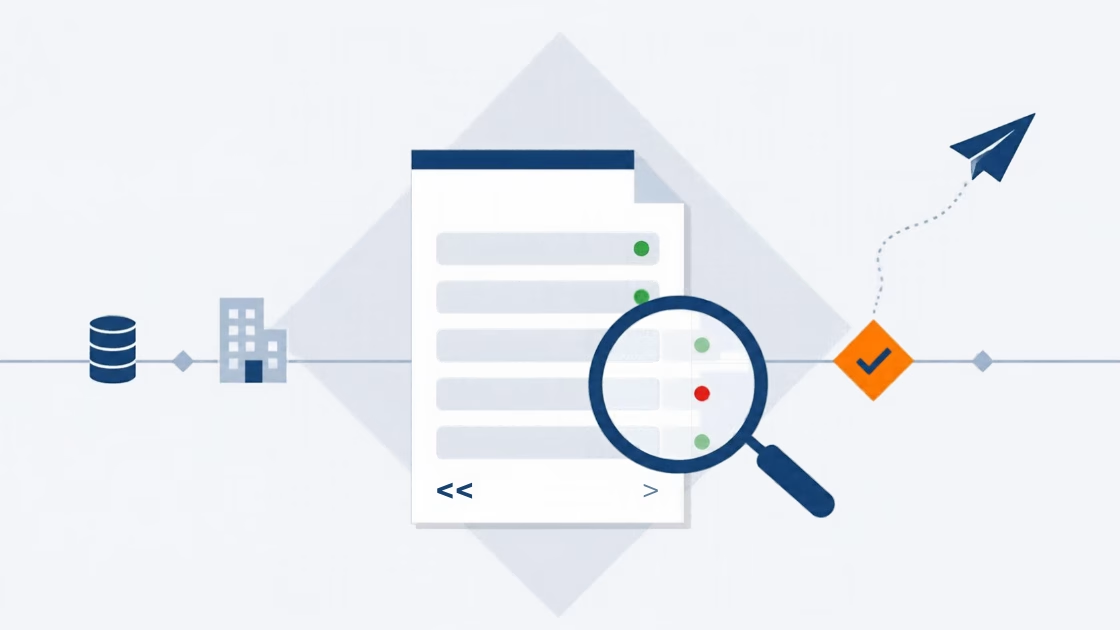
E-Invoice check by Versino Financial Suite

Versino accounting service

Cash flow planning in SAP Business One: What the Versino Financial Suite does differently

Two free webinars in July: Experience the Versino Financial Suite live
E-Invoicing 2026: What is changing now for SMEs and SAP B1 users