
On Immediately is an request to a language model.
Prompt Engineering
Prompt Engineering describes systematic approaches to designing requests so that they lead to optimal results. In this way, a model can be adapted for specific tasks. No fine-tuning or training of the model is necessary. Prompting thus counts as one of the ways to adapt a model to domains, tasks, contexts, or users. Other ways include few-shot learning, in-context learning, fine-tuning, and human-AI interaction.
Academic AI glossaries describe prompt engineering methods based on structured specifications. These include role assignment, context limitation, and step-by-step instructions. Related is priming: the user specifically provides a first context and thus controls the behavior of the model.
Techniques and their effect
Studies on language models as evaluators show how strongly the prompt influences the result. Examples in the prompt (Few-Shot) increased the consistency of GPT-4 from 65.0 to 77.5 percent. However, high consistency does not automatically mean high accuracy. Moreover, the longer prompts made the API calls four times as expensive.
Chain-of-Thought is a common technique to improve the reasoning of a language model. Nevertheless, the model often repeated the exact error contained in the submitted responses with this prompt. Therefore, the context in the prompt can mislead a model. A reference-based method, however, reduced the error rate compared to the standard prompt from 70 to 15 percent.
AI agents also work with prompts. An agent’s language model receives targeted prompts so that it generates the necessary text and actions. Chain of Thought and ReAct are examples of such variants.
Risks
Prompts can also be misused. In jailbreaking, attackers bypass the protection mechanisms of large language models. Early attacks used manually created text inputs. Role-playing games were common: the model was supposed to pretend to be something else or ignore rules („Do Anything Now“). As security barriers have increased, jailbreaking prompts are now also being generated automatically.
Practice
A prompt only shows its value when it is used in a real task. Therefore, it is more worthwhile to try a prompt immediately than to collect many prompts for later use. An example is an interview prompt: The AI only asks one question at a time.
Demarcation
Prompting adapts a model’s behavior without having to retrain the model. Few-Shot Prompting and Meta-Prompting are their own prompt generation techniques with their own entries. Related entries: Few-Shot Prompting; Meta-Prompting; Large Language Model (LLM); Chatbot; AI Agent.

AI in everyday work: Here's how to find the right start

AI assistant meets SAP Business One: Two paths out of the Versino AI shop

Sprint and Swirl: How an AI agent divides work and learns from trials
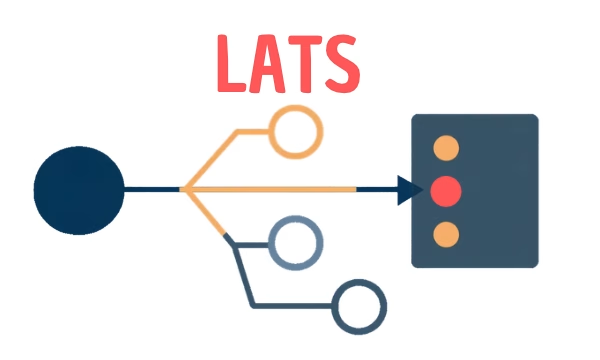
LATS: Considering several paths simultaneously with AI — and the availability check in SAP B1

ReAct and RLEF: How Artificial Intelligence Learns from Real Mistakes — and What Automated Bank Reconciliation in SAP Business One Has to Do with It