
One B1 upgrade Strategy is a documented plan on how and when to upgrade an SAP Business One installation to new Feature Packages, patch levels, and major releases. It regulates the scope of testing, time windows, rollback procedures, and dependencies on add-ons, interfaces, and Customization, so that technical innovations can be leveraged without destabilising the production environment.
Context
A typical strategy includes: (1) Basic rule for Patch Levels – e.g., „PLs will be installed promptly after release, after smoke tests in the test system". (2) Rule for Feature Packages – e.g., „FP upgrade maximum once per year, always only after add-on release from B1UP, Coresuite, CKS.DMS, VFS". (3) Documented test scenario – core business processes (Order to Payment, Purchasing to Paying, Month-end closing, DATEV Export, E-invoice, Special Reports), plus interfaces (Webshop, CRM, Payroll). (4) Rollback Plan — Snapshot of the HANA/SQL DB, status of the SLD, license server backup, add-on statuses. (5) Communication — Window for training, release notes to key users. In hosted environments such as Cloudiax, hosters and partners jointly control the deployment; customers with their own IT plan maintenance windows at night or on weekends. Before each upgrade, a Client copy as a complete test run on a test client.
Demarcation
An upgrade strategy is not a migration project: Migrations (e.g., from SQL to HANA or from a legacy system to SAP B1) follow their own procedure with data transfer, gap analysis, and parallel operation. It is also not a pure release calendar – without scope of testing, rollback, and add-on dependencies, a calendar remains ineffective. And it does not replace the SAP release strategy itself: it is the company-specific 'how' with which a customer benefits from SAP's offering.

AI in everyday work: Here's how to find the right start

AI assistant meets SAP Business One: Two paths out of the Versino AI shop

Sprint and Swirl: How an AI agent divides work and learns from trials
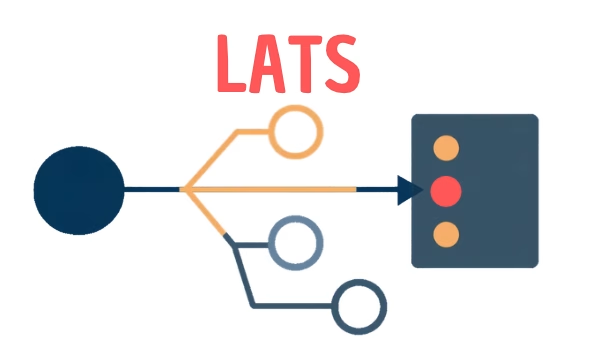
LATS: Considering several paths simultaneously with AI — and the availability check in SAP B1

ReAct and RLEF: How Artificial Intelligence Learns from Real Mistakes — and What Automated Bank Reconciliation in SAP Business One Has to Do with It