B1if-Adapter are the protocol building blocks of the integration Framework for SAP Business One. They regulate how a B1if scenario communicates with the outside world — incoming (listener) and outgoing (sender). Each adapter covers exactly one technology and encapsulates its configuration, error handling, and authentication, so that the actual scenario remains technology-independent.
Context
The most important adapters: Hand To Hand Combat for HTTP(S) communication with REST/XML endpoints; WSAS for web services with WSDL-based SOAP calls; SMTE for sending emails via SMTP; FILR for file access to the server filesystem — import from an input folder, export to an output folder; FTPP for FTP/FTPS-based file transfer to partners or hosting providers; JDBC for direct database queries to external SQL systems; Royal Flying Corps Association for integration with SAP ERP systems via Remote Function Call. Furthermore, there is Mail (Mail Reception), SVCC (Service calls), B1IS (internal B1 scenarios) and the DBAdapter for the Company DB. Each adapter is configured in the SLD per scenario (credentials, host, ports, paths) and works together with the BizStore, which persists transactions and error states.
Demarcation
Adapters are not complete integrations – they only provide the transport. The actual logic (field mapping, conversion, business rules) resides in the Processing Steps and XSLT transformations. Compared to modern iPaaS platforms like SAP Integration Suite or Azure Logic Apps, B1if adapters are technically older, but more deeply integrated with B1 and usable without an additional license. For newer scenarios – especially Peppol, e-invoicing, and BTP-based services – SAP increasingly recommends connectors via Cloud Connector and EDS, which go beyond the adapters.

AI in everyday work: Here's how to find the right start

AI assistant meets SAP Business One: Two paths out of the Versino AI shop

Sprint and Swirl: How an AI agent divides work and learns from trials
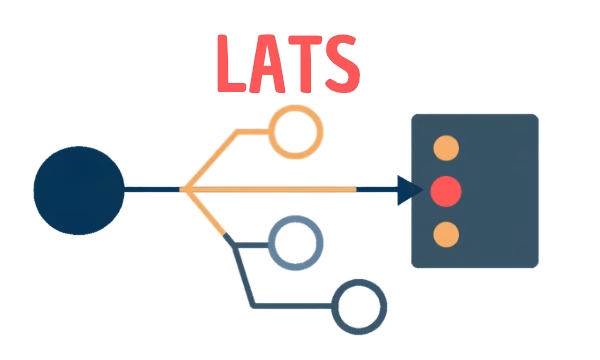
LATS: Considering several paths simultaneously with AI — and the availability check in SAP B1

ReAct and RLEF: How Artificial Intelligence Learns from Real Mistakes — and What Automated Bank Reconciliation in SAP Business One Has to Do with It