Human-in-the-loop is a monitoring model for AI systems in which the human actively approves each decision made by the system. Technical taxonomies for AI distinguish several such monitoring models.
Background
The second model is called Human-on-the-Loop. Here, the human monitors the system and has the authority to intervene and terminate the system.
The degree of automation determines how much human control is required. The higher this degree, the less human supervision and control is necessary. Assistive systems can be activated and overstepped by the human. Autonomous systems, on the other hand, operate without human control and detailed programming.
Regulation also addresses this issue. According to the European AI Act, AI systems in the EU must be safe, transparent, ethical, impartial, and under human control. Article 14 is titled „Human Oversight.“ It is one of the requirements for high-risk AI systems.
Human feedback during learning
People also contribute to the training of AI models. In the RLHF method, people evaluate the outputs of a model. These evaluations provide feedback for an algorithm. The algorithm adjusts the generative model so that the outputs are closer to human preferences. Similarly, labeling (the labeling of data) serves to optimize along human preferences and feedback.
Human involvement has its limits. Collecting human preferences is expensive and time-consuming. Moreover, people do not judge each other uniformly. A study on language models as evaluators shows that the agreement between humans is over 80 percent. A language model as an evaluator achieves the same level of accuracy. Distortions (bias) cannot be completely avoided, but can be recognized and reduced.
Reference to Candis
The 2025 paper presents the Candis solution, which classifies evidence using AI. According to the paper, users can correct misclassifications, and Candis learns from each correction. In case of unclear recognition, Candis automatically assumes „invoice“ according to the paper. The paper summarizes this as „automation, but always with a reliable fallback level and the possibility of human control.“.
The monitoring model that is used depends on the configuration. If the human actively assigns each entry, this is called human-in-the-loop monitoring. If the human only monitors and intervenes when necessary, this is called human-on-the-loop monitoring. A similar principle applies to invoice approval. According to the contribution, invoices in Candis undergo a approval process before being submitted to SAP Business One. In SAP Business One itself, users approve invoices in the approval process before they are added.
Demarcation
Human-in-the-Loop requires the active approval of every decision. Human-on-the-Loop limits human involvement to monitoring with the authority to intervene and terminate. Autonomous systems operate without human control. Related entries: Authorisation of invoices, Authorisation procedures (SAP B1).

AI assistant meets SAP Business One: Two paths out of the Versino AI shop

Sprint and Swirl: How an AI agent divides work and learns from trials
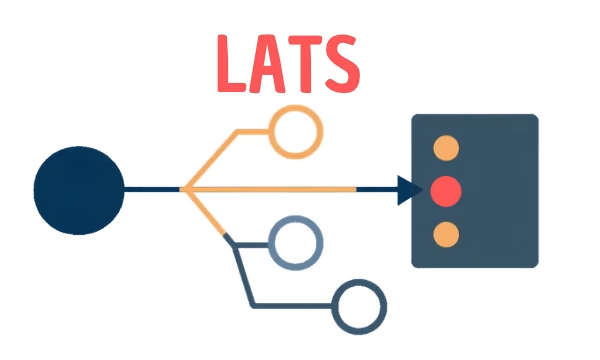
LATS: Considering several paths simultaneously with AI — and the availability check in SAP B1

ReAct and RLEF: How Artificial Intelligence Learns from Real Mistakes — and What Automated Bank Reconciliation in SAP Business One Has to Do with It
SAP B1 10.0 FP2608: Service Layer AI as a transactional layer