One B2B Shop Integration connects an online shop for business customers with SAP Business One and expands on the classic shop integration with functions specifically needed in B2B business: customer-specific prices and Discounts, credit limit, order approvals, open item views, delivery note- / Invoice downloads and multi-level customer hierarchies.
Context
In terms of content, a B2B shop integration goes beyond the classic webshop connector. The shop shows the logged-in customer Seine Pricing from the B1 price list, including special conditions and volume discounts; open receivables volume is checked live against the credit limit from the B1 business partner master data; orders can go to an order approver within the customer's company before they land as a customer order in B1. Order status, delivery tracking, old invoices and maintenance contracts can be viewed in the shop and downloaded as PDFs from the DMS (e.g. CKS.DMS). For technical implementation, individual accounts with OIDC/OAuth login are set up; communication with B1 runs via the Service Layer or via upstream B1if scenarios. For EDI-oriented customers (OEM suppliers, WholesaleIn addition, exchange in the ORDERS/ORDRSP/INVOIC EDI standard is included, often via a clearing provider.
Demarcation
A B2B shop integration is not a B2C shop with a few extras — it reflects different processes and can rarely be operated with pure B2C platforms without major adjustments. It is also not a customer portal solution in the sense of service tickets: dedicated portal systems exist for pure service self-services. Compared to a marketplace (Amazon Business, Mercateo), the focus is on your own branding and deeper SAP B1 integration — the marketplace logic there is more dictated by the operator and less flexibly adaptable.

AI in everyday work: Here's how to find the right start

AI assistant meets SAP Business One: Two paths out of the Versino AI shop

Sprint and Swirl: How an AI agent divides work and learns from trials
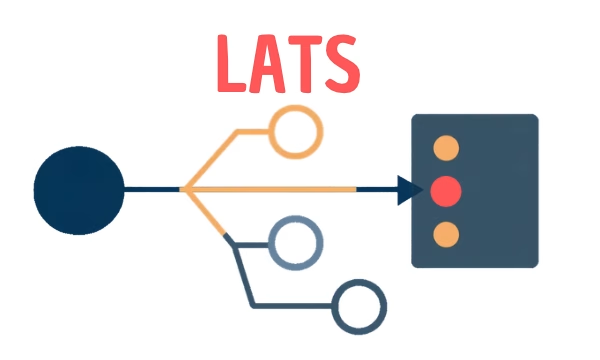
LATS: Considering several paths simultaneously with AI — and the availability check in SAP B1

ReAct and RLEF: How Artificial Intelligence Learns from Real Mistakes — and What Automated Bank Reconciliation in SAP Business One Has to Do with It