the Modernisation of monolithic ERP systems through artificial intelligence (AI) does not start with algorithms, but with a clear understanding. Companies must first analyse how their existing ERP system is structured, where operational bottlenecks arise and what specific potential AI offers to automate processes, improve decisions and make systems more resilient. Without this strategic groundwork, there is a risk of wrong decisions, contradictory requirements and technically driven bad investments. That is why Phase 1 - strategic analysis - the foundation of every successful ERP transformation with AI. It determines whether modernisation proceeds in a targeted manner or gets lost in expensive and lengthy iterations.
The initial situation: Why a strategic analysis is essential
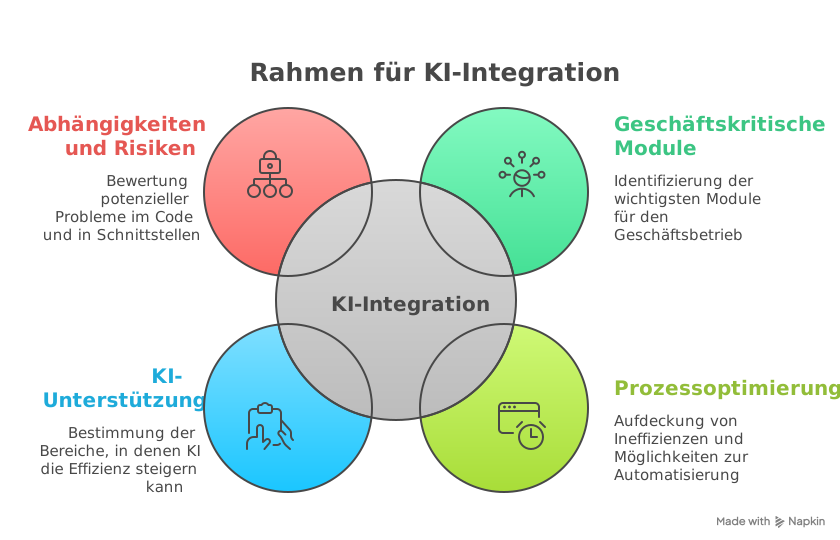
Many medium-sized companies have been working with the same ERP structures for ten or fifteen years. Over time, custom codes, additional modules, workarounds and dependencies have been added. This creates a technical patchwork that is functional but makes any expansion difficult. Companies should therefore check this at the outset:
- Which modules are business-critical?
- Where do process breaks, redundancies or manual activities occur?
- Which areas benefit most from AI support?
- What dependencies and risks exist in the code and in interfaces?
A practical example illustrates the need for this analysis: an industrial company was planning an AI-based demand forecast. However, a close inspection of the system revealed that the relevant transaction data was outdated, incomplete and incorrect. Instead of improving the forecast, the AI would simply have processed bad data faster. Therefore, a fundamental clean-up had to be carried out first. This example shows why the causes need to be understood before the solutions.
From stocktaking to target architecture: clarity through structured questions
A structured approach prevents operational blindness. Companies should therefore systematically divide the analysis into three steps:
- Process inventory: Specialist departments describe processes, bottlenecks and data utilisation.
- System inventory: IT evaluates modules, custom codes, interfaces and technical debts.
- Economic evaluation: Management and controlling examine potentials and risks.
This combination creates a common picture. At the same time, it reduces conflicts, as everyone involved has the same starting point. This shared view is essential for the AI strategy, as AI projects only generate benefits if they address the most important value drivers.
AI governance: the often underestimated key to success
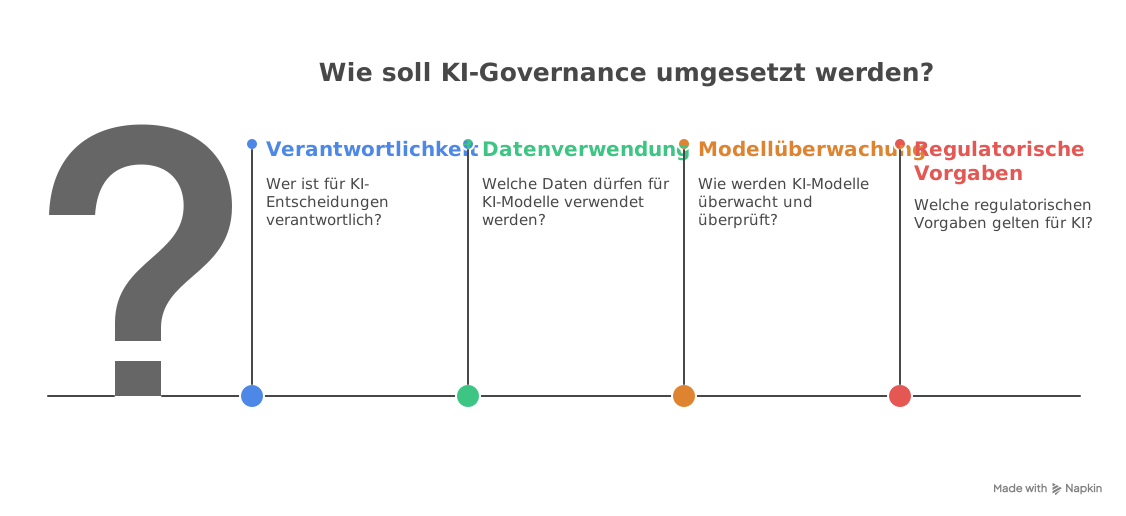
The introduction of AI in ERP processes brings opportunities, but also responsibility. Companies therefore need a governance structure that both manages risks and creates transparency. Good governance clarifies:
- Who is responsible for AI decisions?
- Which data may be used?
- How are models monitored and checked?
- What regulatory requirements apply?
Particularly important is the Human-in-the-loop-approach. AI should never act autonomously when making critical decisions, such as credit checks, production planning or pricing. A human validates results, assesses exceptions and makes final decisions. This mechanism protects companies from misguided decisions and strengthens trust in AI-supported processes.
A practical example shows the benefits: A retail company used AI to optimise scheduling. Critical deviations were quickly recognised thanks to human approval processes. This allowed the system to be introduced in a stable manner without increasing the risk of incorrect order proposals. Governance was therefore not an obstacle, but an enabler.
The role of leadership: transformation needs a clear vision
Technical modernisation only works if the management level sets a clear direction. This includes
- The vision of a modular, AI-supported system landscape
- A commitment to data quality and process standardisation
- Courage to implement priorities consistently
- Early communication with employees
Many transformation projects fail not because of technology, but because of uncertainty. If employees do not know why something is changing, they block new ways of working. Management should therefore explain at an early stage how modernisation will strengthen the company, what benefits will arise and how employees will be involved.
An illustrative example: A mechanical engineering company initially only communicated its ERP strategy within IT. The specialist departments felt ignored and rejected new processes. It was only after an intensive round of communication that acceptance and cooperation improved. This example shows why vision and participation are essential.
Why phase 1 is the decisive lever
The first phase is defined, where to a company wants and Why it should follow this path. It also specifies, like AI is used responsibly and Which areas should benefit first. Clear governance prevents AI from creating isolated stand-alone solutions. At the same time, the analysis and vision create a solid foundation for all subsequent phases.
If you implement phase 1 properly, you will save time, costs and complexity later on. Companies that do without this build solutions without a foundation. This creates new silos, uncontrolled risks and expensive rework. This phase is therefore the most important prerequisite for a modern, scalable and AI-supported ERP landscape.

ReAct and RLEF: How Artificial Intelligence Learns from Real Mistakes — and What Automated Bank Reconciliation in SAP Business One Has to Do with It
SAP B1 10.0 FP2608: Service Layer AI as a transactional layer
Process Reward Models: Why a correct result does not yet prove a correct method

Test-Time Compute Scaling: Why a Smaller AI Model Can End Up Winning — and What Supplier Comparison in SAP Business One Has to Do With It

RLHF and reward models: AI hype or what the approval process in SAP Business One has to do with it