On DATEV account framework is a standard account framework (SKR) defined by DATEV that uniformly assigns business transactions to accounts. It forms the basis for evaluations and for data exchange with the tax advisor.
Background
The most well-known DATEV account frameworks are SKR 03 and SKR 04. DATEV refers to SKR 03 as the „DATEV-SKR process division“: it follows the operational flow. SKR 04, on the other hand, follows the closing division. It builds on the structure of the balance sheet and profit and loss account (GuV). The balance sheet accounts are therefore in the top account classes, followed by the GuV accounts.
Construction based on the example of SKR 03
The SKR 03 divides the accounts into ten account classes. Class 0 contains investment assets and capital accounts, Class 1 financial and private accounts, Class 2 segregation accounts and Class 3 goods receipt and inventory accounts. Class 4 accounts for operating costs. Classes 5 and 6 are unrestricted. Class 7 contains inventories of products, Class 8 the profit and loss accounts, and Class 9 presentation accounts and statistical accounts.
Accrual accounts are by default four digits. For four-digit accrual accounts, the personal accounts are five digits: debtors range from 10000 to 69999, creditors in the range of 70000 to 99999. The debtor balances are recorded in SKR 03 via the omnibus account 1400 (claims arising from deliveries and services).
Automatic accounts
Automated accounts bear a label indicating tax automation: AM stands for automatic sales tax, AV for automatic withholding tax. On such an account, the user records the gross amount. The account itself receives the net amount; the tax automatically appears on the tax accounts.
Choosing the account framework
The company selects the account framework when setting up the client’s accounts. As a rule, it adopts the account framework proposed by the tax advisor. The decision is effective in the long term: a change of the account framework during the business year is no longer possible. The following data exchange formats are available: the DATEV format (CSV booking sheets), DATEVconnect and cloud data services.
In SAP Business One
SAP Business One provides predefined account plans for Germany based on SKR03 and SKR04. In the German localization, the account plan includes the field „DATEV Account“. When exporting for the tax advisor, SAP Business One uses this number instead of the SAP account number. The field „DATEV AutoAccount“ identifies the DATEV AutoAccounts. In the delivered account plans SKR03 and SKR04, this field is already correctly defined. The field „Initial Data Capture“ (Yes/No) controls whether the export takes the account into account.
Demarcation
The term DATEV account framework refers to the specific DATEV standards such as SKR 03 and SKR 04. The automated accounts are a feature of these account frameworks. Related entries: Account framework, SKR 03, account plan, DATEV, DATEV export (SAP Business One), automated account (DATEV).

AI assistant meets SAP Business One: Two paths out of the Versino AI shop

Sprint and Swirl: How an AI agent divides work and learns from trials
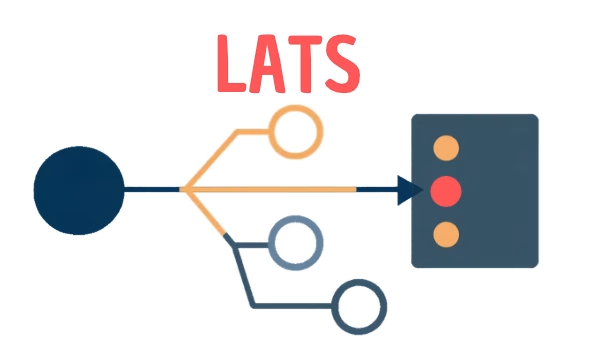
LATS: Considering several paths simultaneously with AI — and the availability check in SAP B1

ReAct and RLEF: How Artificial Intelligence Learns from Real Mistakes — and What Automated Bank Reconciliation in SAP Business One Has to Do with It
SAP B1 10.0 FP2608: Service Layer AI as a transactional layer