
Imputed costs are a sub-area of internal accounting and differ from the expenses of financial accounting. As a rule, they are not directly offset by expenses in external accounting. They are recognised internally in order to record the actual costs of a company and to support decisions that are based on realistic full costs. Examples include imputed rent for the use of own buildings, imputed entrepreneurial wages for the owner or imputed interest on equity. Special valuation requirements can be met by add-ons such as the Versino Financial Suite that enable advanced financial analyses.
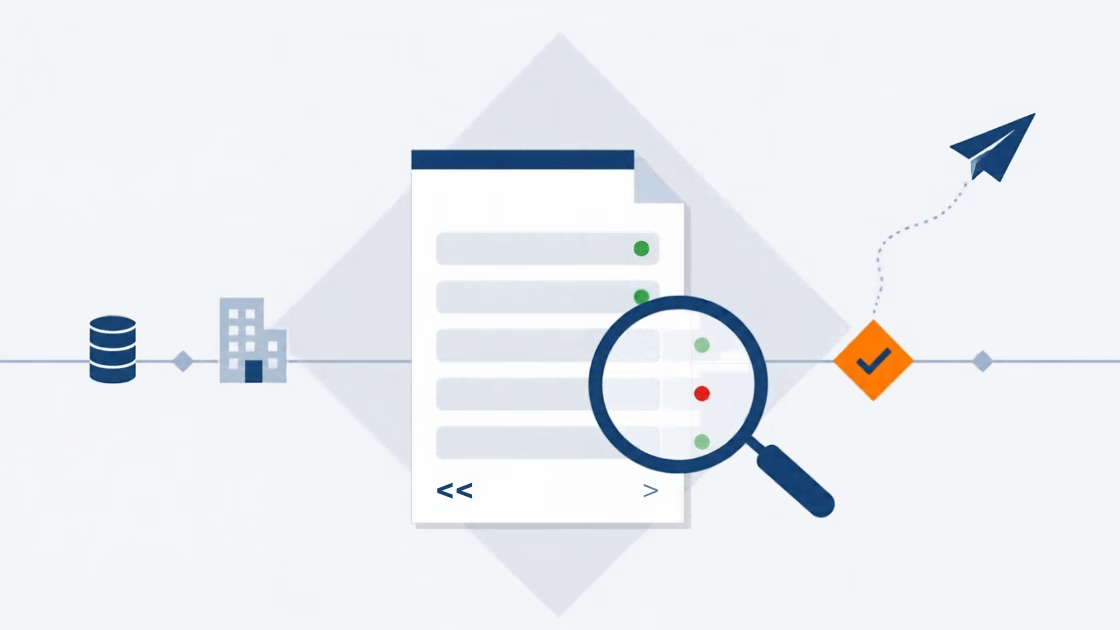
E-Invoice check by Versino Financial Suite
An e-invoice is quickly generated. SAP Business One includes the XRechnung feature as standard, and those who use cks.eINVOICE or the ...

Versino accounting service
Bookkeeping should run quietly. Vouchers come in, are posted, the VAT return goes out, and the tax advisor also gets a ...

Cash flow planning in SAP Business One: What the Versino Financial Suite does differently
Cash flow planning is considered a done deal in many medium-sized companies. After all, there are bank statements, there are open items, ...

Two free webinars in July: Experience the Versino Financial Suite live
In 90-minute sessions, we'll show you practical ways to harmonise, streamline and automate your accounting in SAP Business One….
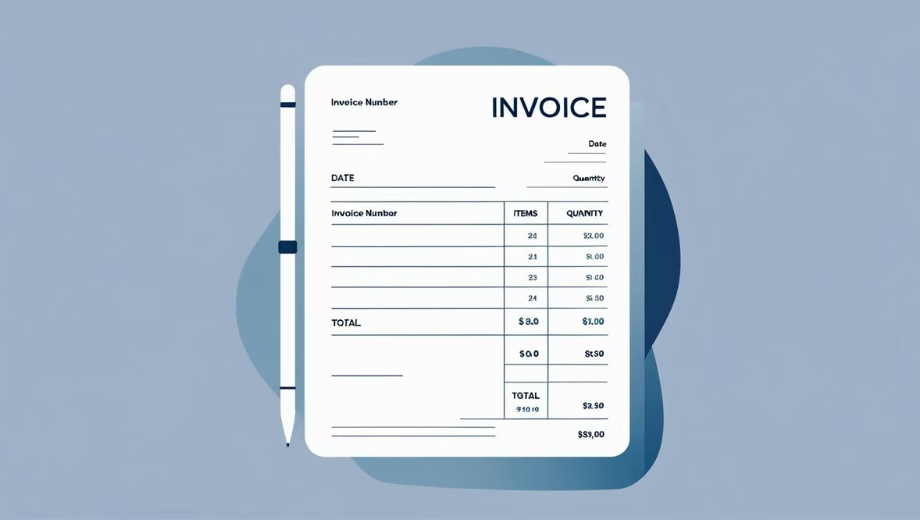
E-Invoicing 2026: What is changing now for SMEs and SAP B1 users
The e-invoice has moved beyond the theoretical IT project phase. Since January 2025, the obligation to receive e-invoices applies to all domestic companies — ...

Netting in SAP Business One: What makes the Versino Financial Suite different
When a business partner is both a customer and a supplier, that sounds like a comfortable situation. You know each other, you trust...
