T-accounts are the fundamental didactic tool of double-entry bookkeeping and serve as a simplified, visual representation of a single bookkeeping account. The name is derived from the graphic form, which resembles a "T": The account name is above the horizontal line, while the vertical line divides the account into two sides. The left-hand side is known as the Target-side, the right side is labelled Have-page. Every entry in the company is recorded as a business transaction that always affects at least two accounts - a debit entry in one account and a corresponding credit entry in another account ("debit to credit"). Even if no one keeps T-accounts manually in modern accounting programmes, this principle remains the invisible logical basis for every single transaction. The entire structure of the Financial management in SAP Business One is based on this "should-have" system. Powerful analysis tools, such as the Versino Financial Suite allow the user to drill down from an aggregated report value to the level of individual debit and credit postings, which corresponds to the digital analysis of a T-account.
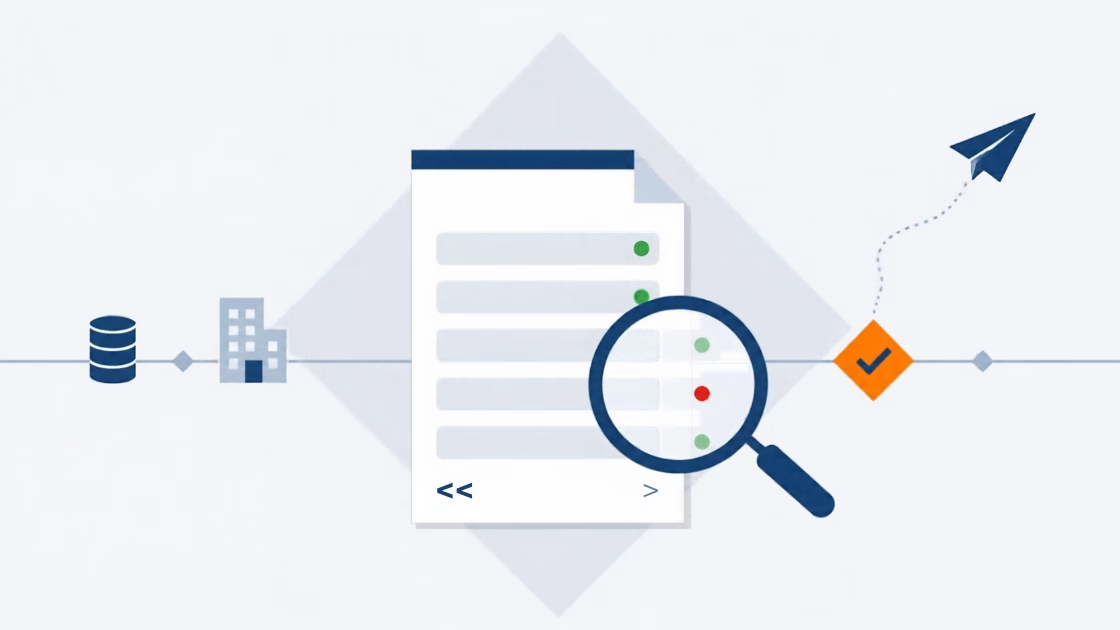
E-Rechnungs-Check der Versino Financial Suite

Versino accounting service

Cash flow planning in SAP Business One: What the Versino Financial Suite does differently

Two free webinars in July: Experience the Versino Financial Suite live
E-Invoicing 2026: What is changing now for SMEs and SAP B1 users