In SAP Business One, the term account capitalisation primarily refers to the capitalisation of fixed assets as part of the asset accounting. There is no explicit capitalisation of G/L accounts; rather, G/L accounts are a combination of creation, use, blocking and, if necessary, deletion.
Capitalisation of fixed assets:
- A fixed asset is capitalised by an incoming invoice - this automatically creates a capitalisation document.
- Alternatively, an activation document can be created manually without a supplier being involved.
- In this case, a Journal entrywhich requires a clearing account in the balance sheet.
- The capitalisation date is derived from the reference date of the incoming invoice or is entered manually in the asset master record.
- After successful activation the activation date is fixed in the system and can no longer be changed.
- Several fixed assets can be capitalised in a single transaction.
- Discounts from incoming invoices can optionally reduce the asset value (credit note procedure).
Accounting effects:
- After activation, the journal voucher and the depreciation area are displayed in the asset master record.
- The installation is then listed as active in the system.
Life cycle of G/L accounts (without explicit capitalisation):
- Create: Creation in the chart of accounts with account code, account name and properties.
- Use: Accounts are used for posting in journals, vouchers and through automatic G/L account determination.
- Locks: Accounts can be deactivated (inactive) during certain periods. No bookings are possible during this period.
- Delete: Accounts without a posting history and without systemic links can be deleted.
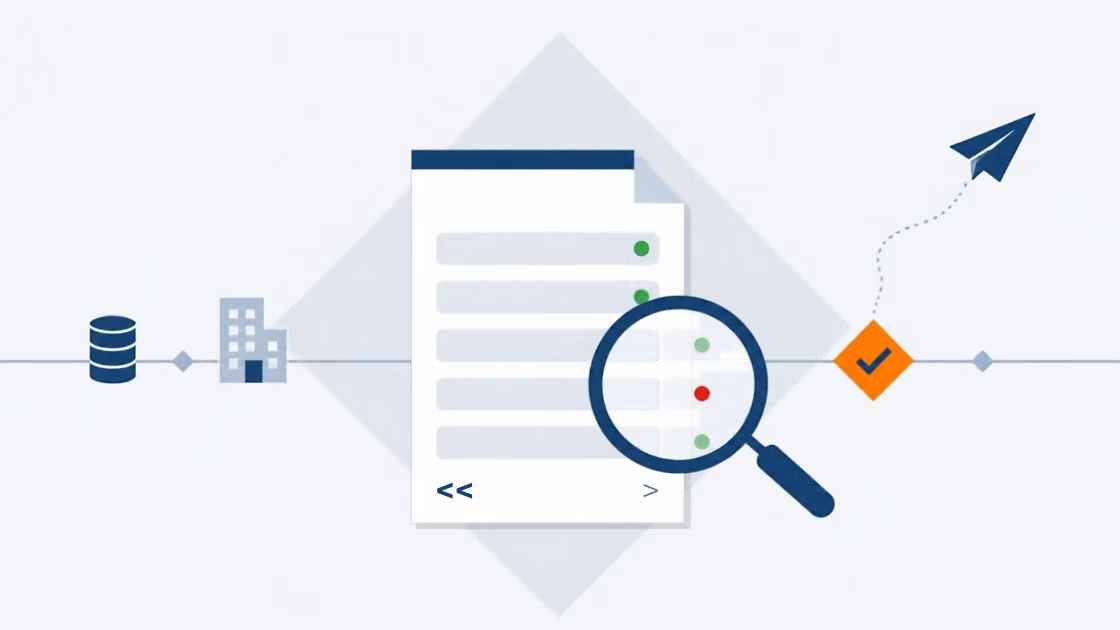
E-Invoice check by Versino Financial Suite
An e-invoice is quickly generated. SAP Business One includes the XRechnung feature as standard, and those who use cks.eINVOICE or the ...

Versino accounting service
Bookkeeping should run quietly. Vouchers come in, are posted, the VAT return goes out, and the tax advisor also gets a ...
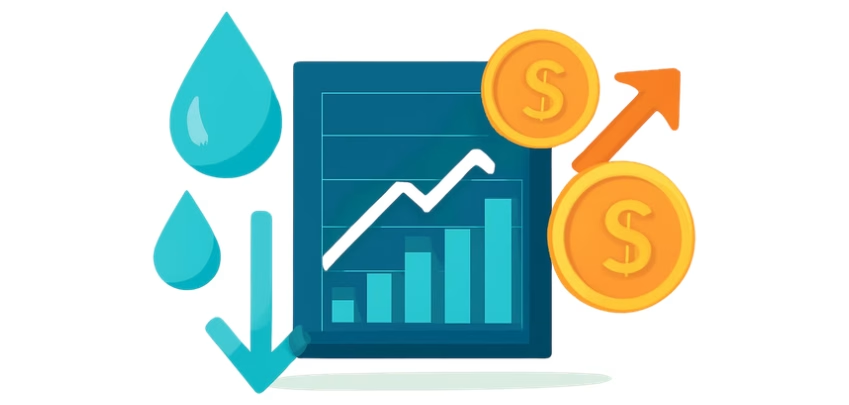
Cash flow planning in SAP Business One: What the Versino Financial Suite does differently
Cash flow planning is considered a done deal in many medium-sized companies. After all, there are bank statements, there are open items, ...

Two free webinars in July: Experience the Versino Financial Suite live
In 90-minute sessions, we'll show you practical ways to harmonise, streamline and automate your accounting in SAP Business One….
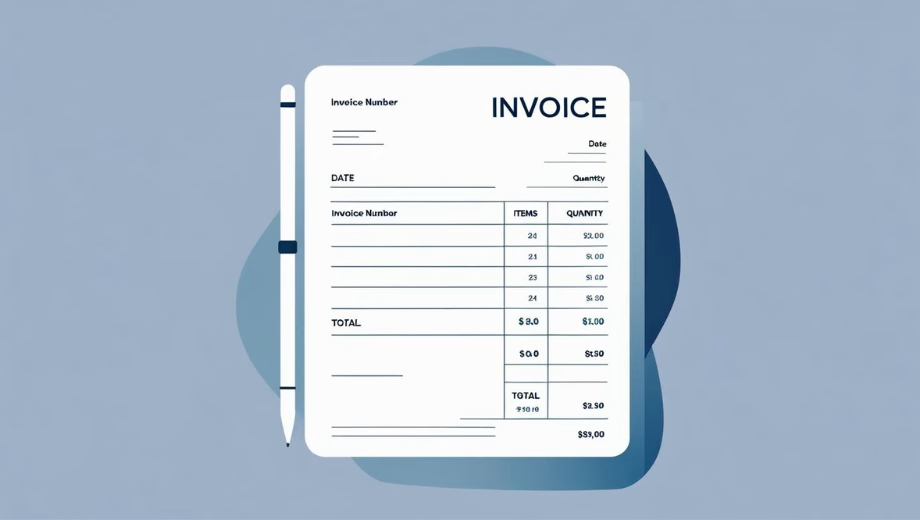
E-Invoicing 2026: What is changing now for SMEs and SAP B1 users
The e-invoice has moved beyond the theoretical IT project phase. Since January 2025, the obligation to receive e-invoices applies to all domestic companies — ...

Netting in SAP Business One: What makes the Versino Financial Suite different
When a business partner is both a customer and a supplier, that sounds like a comfortable situation. You know each other, you trust...
