Running items are amounts that an entrepreneur collects and spends on behalf of and for the account of another person. They are not subject to sales tax and are not included in the remuneration for tax purposes and are therefore excluded from the calculation of profit as operating income and operating expenses in the income statement.
Legal basis
Two regulations use the term. § 4, paragraph 3, sentence 2 of the EStG regulates the revenue surplus calculation: operating revenues and operating expenses that are collected and disbursed in the name and on behalf of another are excluded. The law explicitly lists these as continuous items. § 10, paragraph 1, of the UStG contains the same formula for the value-added tax: continuous items do not constitute remuneration. Both regulations require that the entrepreneur acts in a foreign name and on behalf of another entity.
value added tax
Because recurring charges are not included in the fee, no sales tax is charged on them. The entrepreneur simply passes on the amount.
Examples
A typical example are court costs and fees that a tax advisor or lawyer charges on behalf of the client. If the tax advisor passes on such court fees, the process remains profit-neutral for him. A second example are ongoing taxes. The employer retains the employee’s salary tax, payroll tax and solidarity surcharge and pays them. In doing so, he acts only as an agent.
Booking
Interim postings are performance-neutral. As a rule, the company therefore accounts for them via balance sheet accounts without affecting the profit and loss account. The company’s profit does not change when the amount is received or transferred.
Demarcation
What matters is in whose name the entrepreneur acts. If he receives payment in his own name on an own claim, there is no ongoing item involved. The payment is then an operating income that flows to the entrepreneur.
In practice, sales tax and value-added tax are often called „pass-through items“ because they do not burden the entrepreneur economically. This usage of language means something different than the pass-through items under § 10 of the Value-Added Tax Act (UStG). On the other hand, invoice-based items under § 250 of the German Commercial Code (HGB) relate to the temporal separation of one’s own expenses and revenues. Related entries: Invoice-based item separation (RAP), open items (OPOS), sales tax, value-added tax deduction.

AI assistant meets SAP Business One: Two paths out of the Versino AI shop

Sprint and Swirl: How an AI agent divides work and learns from trials
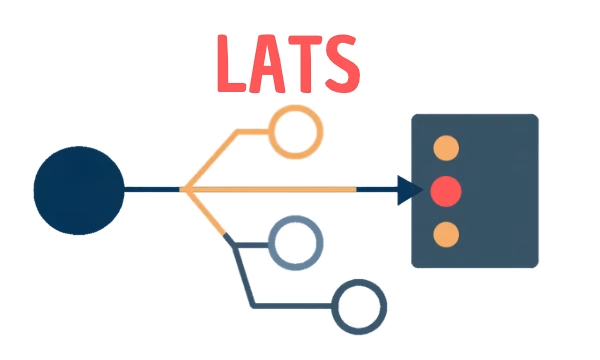
LATS: Considering several paths simultaneously with AI — and the availability check in SAP B1

ReAct and RLEF: How Artificial Intelligence Learns from Real Mistakes — and What Automated Bank Reconciliation in SAP Business One Has to Do with It

SAP B1 10.0 FP2608: Service Layer AI as a transactional layer