Of the Extraction value is the value at which an entrepreneur begins withdrawing funds from the business. For tax purposes, the partial value is decisive according to § 6, paragraph 1, no. 4 of the EStG.
What a withdrawal is
Section 4, paragraph 1, sentence 2 of the EStG defines withdrawals as all economic goods that the taxpayer has withdrawn from the business for himself, for his household or for other non-business purposes during the course of the business year. This includes cash withdrawals, goods, products, services and benefits.
Evaluation with the partial value
In the case of inventory, the part value usually corresponds to the replacement cost. The historical purchase cost is not decisive, nor is the selling price with profit margin. An example: For purchase costs of €200, a part value of €220 and a selling price of €321, the part value is €220.
value added tax
The taking possession of an item is, from a sales tax perspective, a gratuitous transfer of value. § 3(1b), No. 1 of the UStG equates it to a supply of goods for consideration. The prerequisite is that the item or its components qualifies for deduction of the input tax. The basis for assessment is, pursuant to § 10(4), No. 1 of the UStG, the purchase price plus any incidental costs at the time of taking possession, or alternatively the self-cost price. For consumption and performance-based supplies, the incurred costs are counted (§ 10(4), No. 2 and 3 of the UStG).
If the entrepreneur did not deduct VAT when purchasing goods, for example as a small business owner, no sales tax is due on the withdrawal. A cash withdrawal is never subject to sales tax. For non-remunerated value transfers such as food, the BMF publishes annual lump-sum amounts. For company cars, if more than 50 of them are used for % business purposes, the % 1 rule applies: the entrepreneur pays 1 % of the gross list price per month. For sales tax purposes, % this value is counted lump-sumly at 80. Alternatively, a logbook can be used.
Booking
In SKR04, the entrepreneur books private extraction (2100) for extraction by entrepreneurs for purposes outside the business (4620) and sales tax (3800). In SKR03, account 8910 takes over the role of account 4620. An example: A bicycle dealer extracts a bicycle that he purchased for 300 €. The replacement value upon extraction is 320 €. The entrepreneur books private extraction 380.80 € for free extraction 320.00 € and sales tax 60.80 €.
The booking increases the profit by the partial amount and thus neutralizes the previously booked expense. The equity decreases through the private account. If the entrepreneur withdraws investment assets, he treats the transaction as a sale of assets: he records the remaining book value and sets the withdrawal at the reacquisition value.
Demarcation
Capital companies do not have private accounts. The counterpart to the withdrawal is the deposit. It is set at the partial value, at most however at the cost of acquisition or production, if the item is not more than three years old (§ 6, paragraph 1, no. 5 EStG). Related entries: Private deposit and private withdrawal, partial value, equity (SAP Business One).

AI assistant meets SAP Business One: Two paths out of the Versino AI shop

Sprint and Swirl: How an AI agent divides work and learns from trials
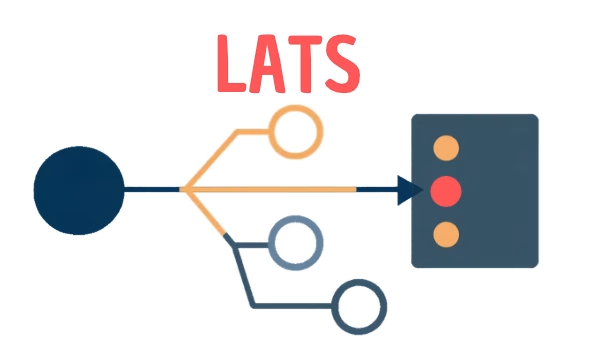
LATS: Considering several paths simultaneously with AI — and the availability check in SAP B1

ReAct and RLEF: How Artificial Intelligence Learns from Real Mistakes — and What Automated Bank Reconciliation in SAP Business One Has to Do with It
SAP B1 10.0 FP2608: Service Layer AI as a transactional layer