The SEPA Credit Transfer (SCT) is a standardised, euro-denominated bank transfer from the payer to the payee within the Single Euro Payments Area. SEPA comprises 36 European countries and uses uniform ISO-20022 XML formats, commonly referred to as pain messages (Payment Initiation).
Context
In the SAP Business One environment, SEPA transfer is the standard method for outgoing Supplier payments in Euros. The format pain.001.003.03 covers classic domestic payments, pain.001.001.09 Furthermore, it replaces the previous DTAZV format for international payments. The SEPA transfer is executed via the payment assistant: this selects open A/P invoices by due date and generates the payment file. A prerequisite is that the payment method (e.g. SEPA-CTunder Administration > Settings > Banking > Payment Methods configured and in the business partner master file with IBAN and the BIC are stored. The generated pain file is then transferred to the main bank, typically via EBICS or HBCI. In doing so, the SEPA transfer bundles supplier payments in a regulated, machine-readable process and replaces individual online banking transfers.
Demarcation
Unlike SEPA Direct Debit (SDD) format pain.008.003.02The recipient does not collect the amount from the payer, but rather the payer actively instructs their bank to make the transfer. SDD is therefore used for debt collection from customers, while SCT is used for settling liabilities to suppliers. SEPA transfers should also not be confused with classic cross-border payments (AZV) outside the SEPA area, which use their own formats and fee structures.
AI in everyday work: Here's how to find the right start

AI assistant meets SAP Business One: Two paths out of the Versino AI shop

Sprint and Swirl: How an AI agent divides work and learns from trials
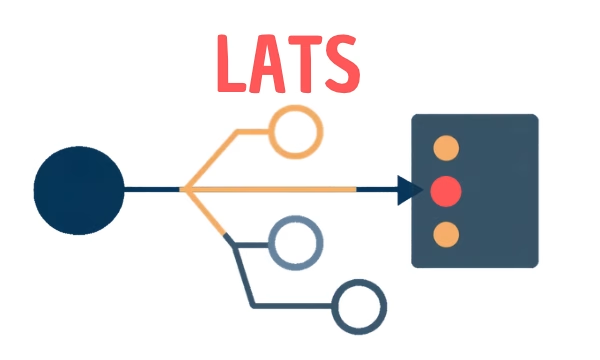
LATS: Considering several paths simultaneously with AI — and the availability check in SAP B1

ReAct and RLEF: How Artificial Intelligence Learns from Real Mistakes — and What Automated Bank Reconciliation in SAP Business One Has to Do with It