Accrued income and prepaid expenses (ARAP) arise when a company makes payments before the balance sheet date but the corresponding consideration is not received until the following year. The aim is to recognise income on an accrual basis. The legal basis can be found in Section 250 (1) HGB.

Typical use cases:
- Advance payments for rent, insurance, interest, fees or wages
- Lease payments that fall into the new year on a pro rata basis
- Accrual of expenses that are economically attributable to a subsequent period
Example:
A lease paid on 1 December for three months (December-February) contains expenses for the new financial year (January/February). This part is recognised as prepaid expenses.
Booking technology:
- In the old year: Debit posting to account "Prepaid expenses and deferred charges"Credit entry to the corresponding expense account.
- In the new year: Reversal via credit entry to ARAP account, debit entry to the corresponding expense account.
Differentiation from similar terms:
- Deferred income (PRAP): Income in the old year, economically attributable to the new year.
- Anticipatory items: Expense/income in the old year, payment in the new year → no ARAP, but Other receivables/liabilities.
- Transitory items: Payment in the old year, expense/income in the new year → classic ARAP/PRAP.
Technical implementation in SAP Business One:
- Posting is done manually via journal entries.
- Among finance an accruals and deferrals document can be created.
- Extended functions for automatic demarcation are available via add-ons such as Versino Financial Suite available.
Chart of accounts (example SKR 03):
- 8900 - Prepaid expenses and deferred charges
- 0986 - Damnum/Disagio
- 0987 - Prepaid expenses and deferred charges (debit retained earnings)
- 2900 - Prepaid expenses and deferred charges
- 2920 - Value added tax on advance payments received (not directly ARAP, but related)
Functional benefits:
- Ensuring that the financial position is presented on an accrual basis
- Reduces distortions in the annual financial statements due to non-accrued payments
- Important component for the monthly, quarterly and annual financial statements
Summary:
Prepaid expenses ensure that only those expenses are recognised in the balance sheet that economically belong to the period under review. In SAP Business One, this is implemented via corresponding postings and account assignments, supported by additional modules for automation if necessary.
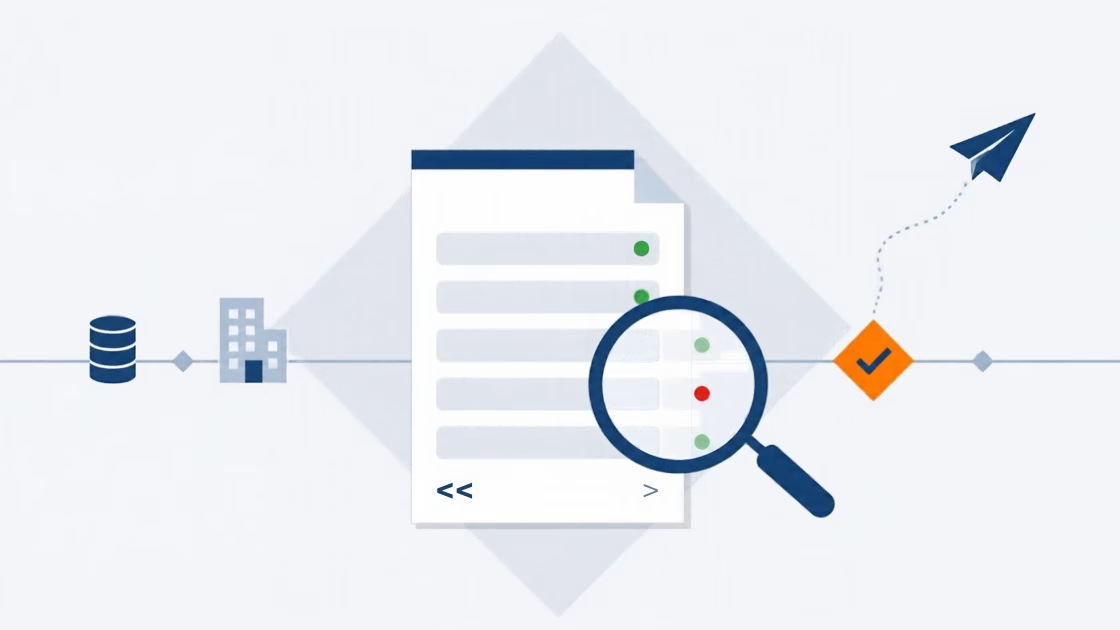
E-Invoice check by Versino Financial Suite

Versino accounting service

Cash flow planning in SAP Business One: What the Versino Financial Suite does differently

Two free webinars in July: Experience the Versino Financial Suite live
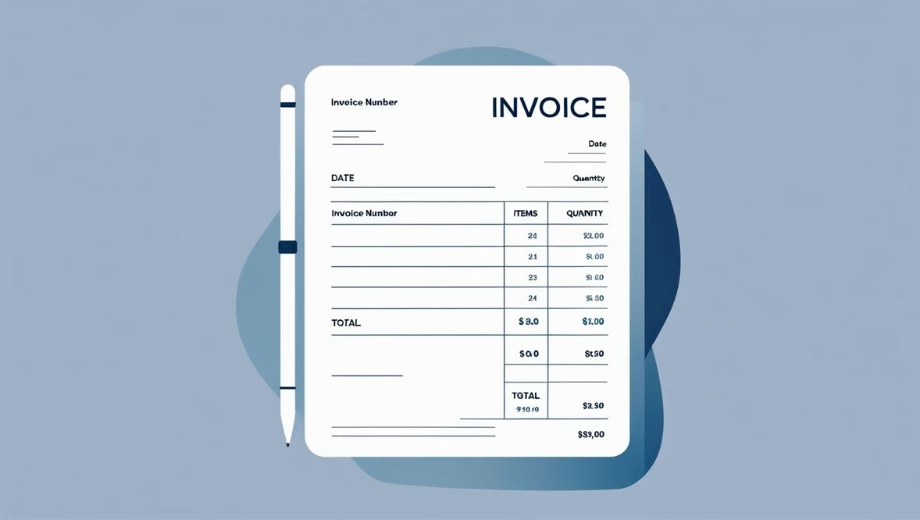
E-Invoicing 2026: What is changing now for SMEs and SAP B1 users