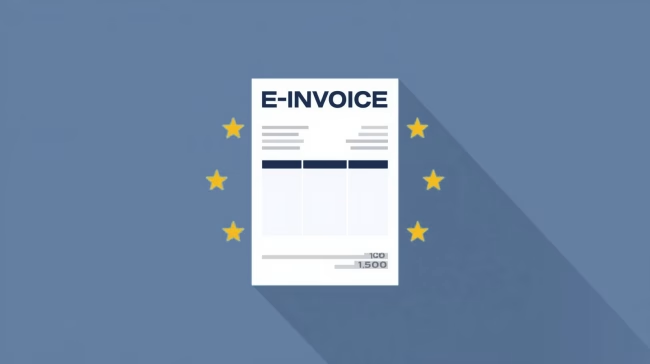
E-Reporting refers to the obligation to report central transaction data electronically and directly to the tax authorities. E-reporting concerns the reporting of data to the state, not the exchange of invoices between business partners.
Examples
According to the article (as of November 2025), in addition to the e-invoicing requirement, an e-reporting obligation applies in France for B2C transactions and cross-border transactions. The certified French platforms (PDPs), as partners of the tax administration, not only handle invoice exchange but also carry out e-reporting. According to a source in the industry (as of 2026), Belgium is preparing an e-reporting obligation that is almost real-time, expected to be implemented in 2028.
Demarcation
The e-invoice is the structured invoice document between seller and buyer. E-reporting, on the other hand, concerns the reporting of data to the tax authorities. See also Real-Time Reporting (e-invoice), Y-model (e-invoice) and Digital Reporting Requirement (DRR).

E-Invoice check by Versino Financial Suite
Webinar E-Invoice Final Rush

E-Invoicing 2026: What is changing now for SMEs and SAP B1 users
E-Invoicing 2026: From Receipt to Mandatory Issuance — what SMEs must clarify now

E-invoicing in Europe: Harmonised standard and national fragmentation

E-invoicing in SMEs: The clock is ticking

France E-invoicing 2026: What companies with a French tax number need to know now

Service description in the e-invoice: How much detail really needs to be included?
Verifactu in Spain: the new invoicing obligation