P&L accounts in SAP Business One are G/L accounts used for Recognition of income and expenses of a company. They are central elements of the Income statement and show how operating activities affect the operating result.

1. definition and purpose
-
Document P&L accounts Revenue (income) and Expenditure (expenses).
-
They are part of accounting and serve to Determination of net income for the year or deficit.
-
They differ from balance sheet accounts (assets, liabilities, equity) in that they are only valid for a limited period of time. Closed at the end of the period.
2. integration into the chart of accounts
-
P&L accounts are located in the Chart of accounts on the active levels (levels 4-10).
-
the Account type is created as "Income" or "expense" defined.
-
You can tax code, Budget relevance or Cash flow relevance wear.
-
Accounts shown in green are included in the G/L account determination deposited.
3. booking behaviour and account determination
SAP Business One automatically uses P&L accounts when posting various business transactions. This assignment takes place via the G/L account determination:
-
projectsP&L accounts can be used for specific projects (cost/income objects).
-
cost accounting: Link with Cost types or Allocation rules.
-
BudgetingAccounts can be opened as Budget-relevant be marked.
-
Cash flow reports: Expense/income accounts can be included depending on the labelling.
-
DepreciationDepreciation accounts affecting the income statement for asset accounting are allocated separately.
5. period-end closing
-
P&L accounts are Closed at the end of the financial year (e.g. to the Annual result account).
-
In SAP Business One, you can create a separate account for each P&L account. "Period-end closing account" be defined.
Versino Financial Suite
With the Versino Financial Suite P&L accounts are managed more efficiently, transparently and securely in SAP Business One. The suite automates routine processes, offers centralised control and flexible evaluations and supports professional, legally compliant financial accounting
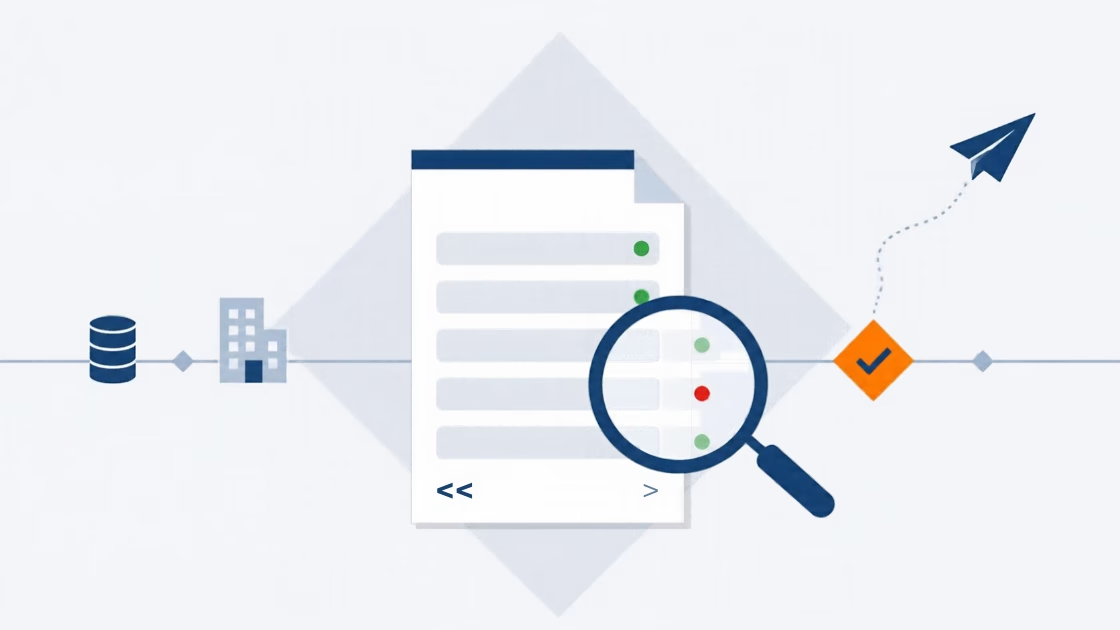
E-Invoice check by Versino Financial Suite

Versino accounting service
Cash flow planning in SAP Business One: What the Versino Financial Suite does differently

Two free webinars in July: Experience the Versino Financial Suite live
E-Invoicing 2026: What is changing now for SMEs and SAP B1 users