In SAP Business One Revenue accounts are used to record income from the sale of goods and services. They are an essential component of the Chart of accounts and the basis for preparing financial reports and analysing company performance. The most important aspects of revenue accounts are summarised below:
-
- Standard revenue account:
SAP Business One uses a standard revenue account for the automatic posting of outgoing invoices. This account is defined in the G/L account determination settings and can be customised if required. - Revenue accounts in article and warehouse master data:
In contrast to the standard account, the base data specific revenue accounts can be stored for individual items or warehouses. In such cases, this setting overwrites the standard revenue account. - Revenue accounts according to article groups:
G/L account determination can be configured so that different product groups are assigned their own revenue accounts. This configuration enables a detailed analysis of sales by product category. - Revenue accounts by warehouse location:
Separate revenue accounts can be defined for different warehouses. This function makes it easier to allocate and analyse sales by sales location. - Adjustment for chargebacks:
Sales transactions that are cancelled, for example by Creditsautomatically lead to an adjustment of the corresponding revenue account.
- Standard revenue account:
- Reporting:
Revenue accounts form the basis for financial reports such as the profit and loss account and provide valuable insights into the company's financial performance.
Versino Financial Suite
With the Versino Financial Suite the management, analysis and period-based accrual of revenue accounts in SAP Business One become more efficient, transparent and error-free. The automation of postings and the centralised overview of all revenue account movements enable a faster response to changes and sustainably improve data quality. The Versino Financial Suite also ensures complete traceability of all revenue streams - an important advantage for internal analyses, external audits and GoBD-compliant documentation.
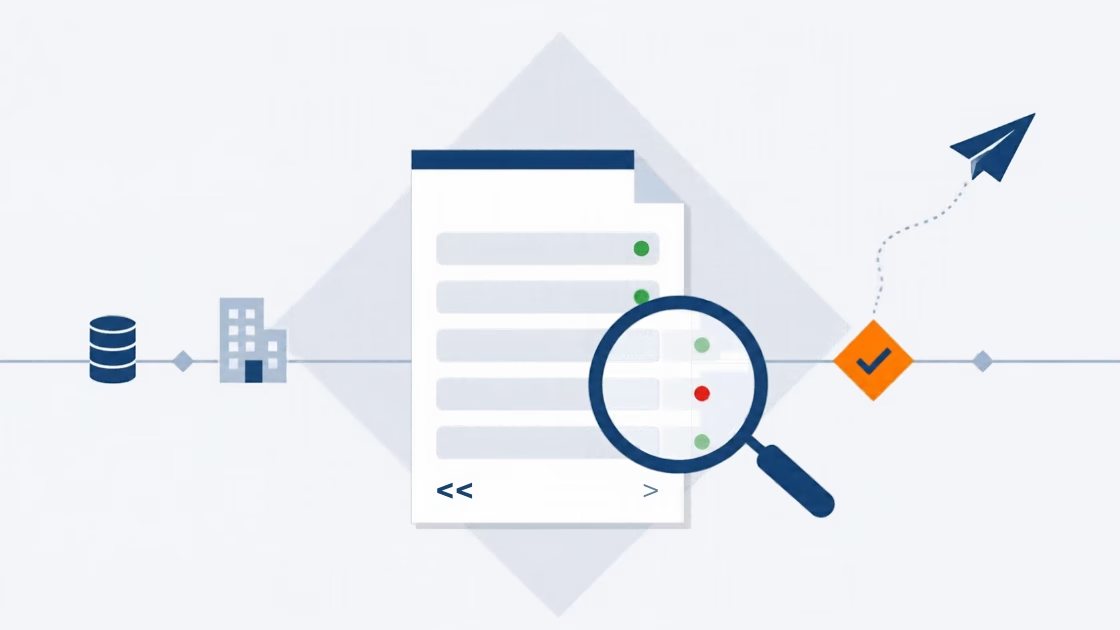
E-Invoice check by Versino Financial Suite
Versino accounting service
Cash flow planning in SAP Business One: What the Versino Financial Suite does differently
Two free webinars in July: Experience the Versino Financial Suite live
E-Invoicing 2026: What is changing now for SMEs and SAP B1 users