A standardised electronic bank statement format (MT940) for transferring bank statement data between banks and companies.
Detailed explanation/description:
- Detailed functionality, purpose and context in SAP Business One
MT940 files contain structured information about account balances, postings and balances, which are imported into SAP Business One as electronic bank statements and processed automatically. - Integration into business processes
The MT940 file is generated by the banking system, imported into SAP Business One and used for automated bank account reconciliation. - Relevant modules and functions
Bank statement processing, payment module (Electronic Bank Statement), automatic allocation Open item. - Concrete application examples
A company imports MT940 files from its house bank on a monthly basis, imports them into the Bank statement processing and automatically reconciles payments with outstanding invoices.
Key features/important aspects:
- Standardised by SWIFT.
- Tag-based structure: e.g.
:20:(reference number),:25:(account),:61:(booking line),:62F:(closing balance). - Supports transaction type codes (e.g. FINT = interest, CHG/CHG = charges, NTRF = credit transfer) for classification.
- Supplementary field (tag 86) provides narrative details and SEPA references.
- Can be customised with DMEE or format definition according to bank specifications.
Note on the Versino Financial Suite:
the Versino Financial Suite offers a convenient extension for SAP Business One, with which MT940 files can be automatically imported, analysed and transferred to accounting. It supports intelligent payment allocation and considerably simplifies the reconciliation of open items.
Target group:
End users in accounting, key users and consultants who want to process bank statements digitally and reconcile payments automatically.
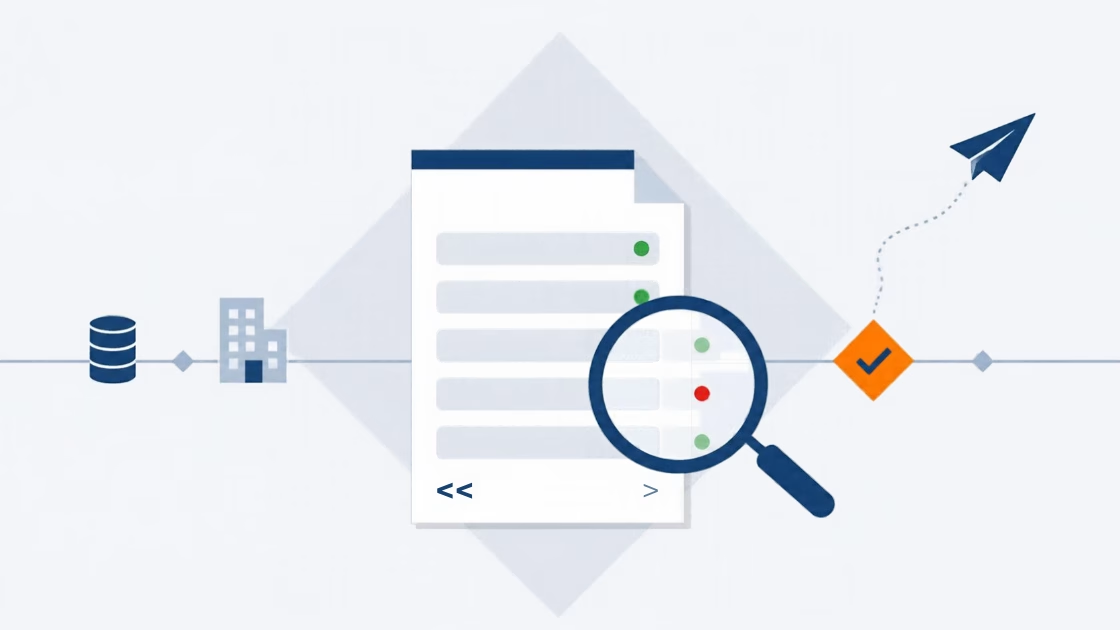
E-Invoice check by Versino Financial Suite
An e-invoice is quickly generated. SAP Business One includes the XRechnung feature as standard, and those who use cks.eINVOICE or the ...

Versino accounting service
Bookkeeping should run quietly. Vouchers come in, are posted, the VAT return goes out, and the tax advisor also gets a ...
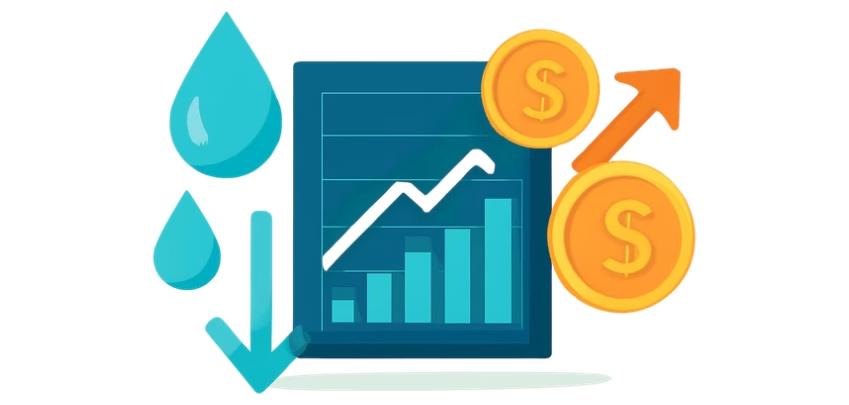
Cash flow planning in SAP Business One: What the Versino Financial Suite does differently
Cash flow planning is considered a done deal in many medium-sized companies. After all, there are bank statements, there are open items, ...

Two free webinars in July: Experience the Versino Financial Suite live
In 90-minute sessions, we'll show you practical ways to harmonise, streamline and automate your accounting in SAP Business One….
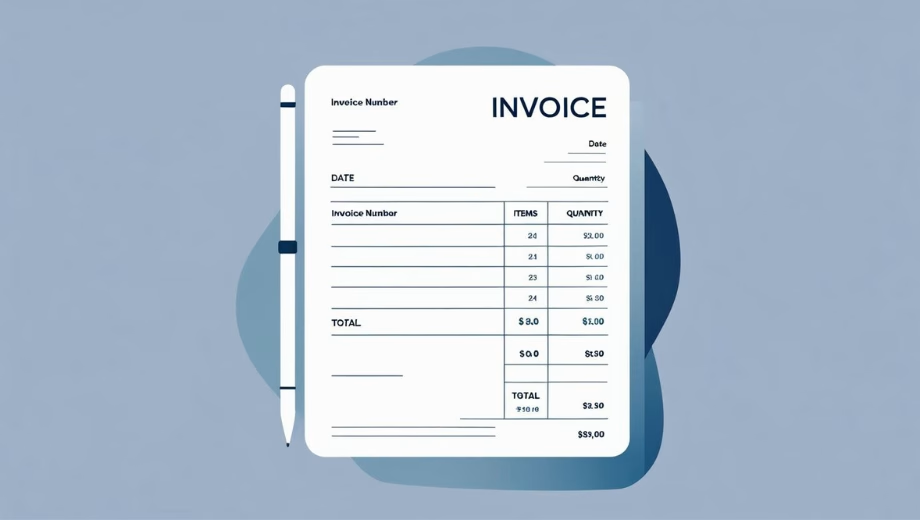
E-Invoicing 2026: What is changing now for SMEs and SAP B1 users
The e-invoice has moved beyond the theoretical IT project phase. Since January 2025, the obligation to receive e-invoices applies to all domestic companies — ...

Netting in SAP Business One: What makes the Versino Financial Suite different
When a business partner is both a customer and a supplier, that sounds like a comfortable situation. You know each other, you trust...
