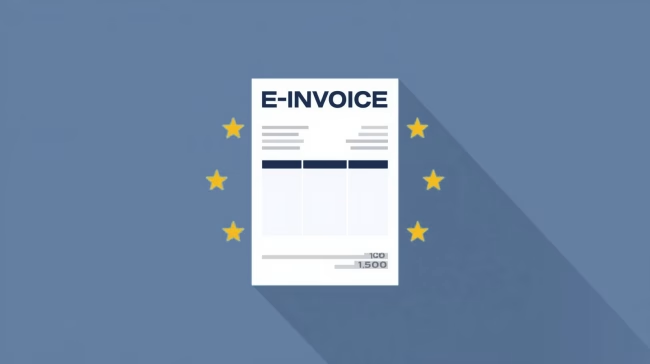
One E-bill is an invoice that is issued, transmitted and received in a structured electronic format and allows for electronic processing (§ 14, paragraph 1, sentence 3 of the UStG).
This definition has been in effect since January 1, 2025. A simple PDF or email is no longer sufficient. Formats according to the European standard are permitted. EN 16931 (in Germany the XRechnung) and the hybrid format ZUGFeRD Starting with version 2.0.1. The ZUGFeRD profiles MINIMUM and BASIC-WL are not sufficient for this purpose. Agreed formats such as EDI remain permissible if the data can be extracted into an EN-16931-compliant format. In the case of hybrid formats, the structured part takes precedence.
The requirement only applies to transactions between domestic companies (B2B). Since January 1, 2025, companies must be able to receive electronic invoices. A single email account is sufficient for this purpose. Exceptions include small-value invoices up to 250 euros gross, driver's licenses, and invoices from small businesses. In addition, the Electronic Invoice Regulation (ERechV) with a leadway ID and the OZG-RE platform apply to authorities (B2G).
In the SAP Business One context
SAP Business One brings the XInvoice in the standard with. Alternatively, cks.eINVOICE or the Coresuite Designer The invoice file. For incoming invoices, the electronic document import wizard reads a PDF file embedded with XML (ZUGFeRD). In practice, the e-invoice rarely fails to generate, but rather the content: Any gaps in the master data lead to an invoice that fails the audit.
Demarcation
Paper invoices and unstructured electronic files are considered „other invoices“. A pure PDF invoice without structured data is therefore not an e-invoice.
Legal status: MF Treasury letter 2024 and 2025, MF Treasury FAQ as of March 2026.

E-Invoice check by Versino Financial Suite
Webinar E-Invoice Final Rush

E-Invoicing 2026: What is changing now for SMEs and SAP B1 users
E-Invoicing 2026: From Receipt to Mandatory Issuance — what SMEs must clarify now

E-invoicing in Europe: Harmonised standard and national fragmentation

E-invoicing in SMEs: The clock is ticking

France E-invoicing 2026: What companies with a French tax number need to know now

Service description in the e-invoice: How much detail really needs to be included?
Verifactu in Spain: the new invoicing obligation