With Feature Package 2602, SAP Business One 10.0 is extended
Read More
19
apr
Everything to do with SAP Business One, ERP projects and business software
With Feature Package 2602, SAP Business One 10.0 is extended
Read More SAP Business One 10.0 FP2602 brings tangible improvements in three
Read More SAP Business One 10.0 Feature Package 2602 brings targeted improvements in three key areas: CRM, Sales, and Purchasing.
Read More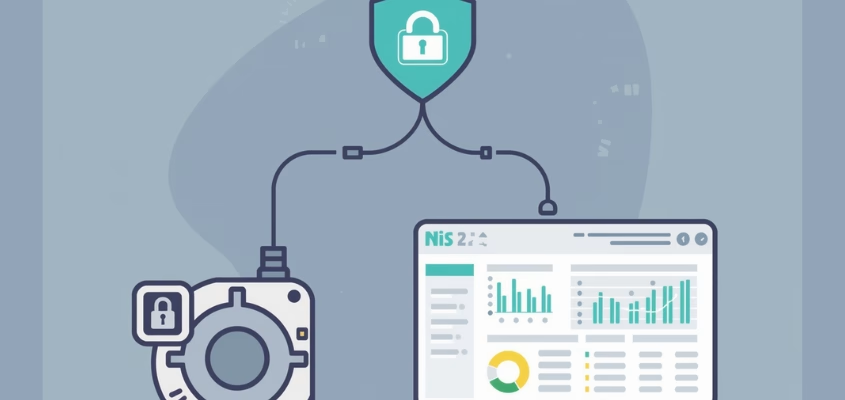
The grace period is over. Registration deadlines at the BSI expired on March 6, 2026, and the Federal Office has moved to active enforcement. For managing directors in medical technology, this means: those who have treated NIS-2 as an IT issue so far may face unexpected personal consequences.
Read More
E-invoicing is no longer a niche topic in Europe. With Directive 2014/55/EU and the technical standard EN 16931, the EU has created a common framework - but in practice, the picture is much more complex.
Read More
In March 2026, SAP published the latest SAP Business One Road Map for SAP Business One. It shows where the journey is heading - for existing customers, for partners and for companies considering an implementation. This article summarises the most important content: what has already been delivered, what will follow in the short term and what strategic course SAP is setting for the long term.
Read More
The introduction of the mandatory e-invoice shifts the focus away from the mere PDF towards structured data. This is particularly noticeable in the service description: what was previously often outsourced to attachments, service specifications or delivery notes must now at least essentially be in the data file of the e-invoice itself.
Read More
The basic topic of mandatory e-invoicing has now arrived in most companies. The real uncertainty today lies elsewhere: in the details
Read More With MARIProject 8.0.000, users get a revised design with flexible Horizon themes, closer integration with the SBO Web Client
Read More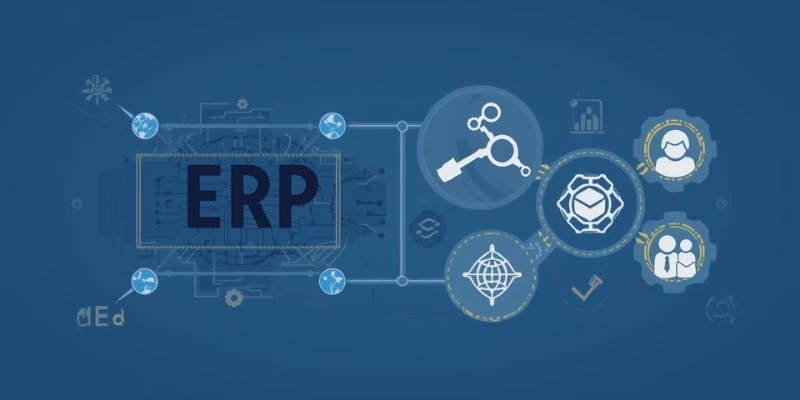
The modernisation of monolithic ERP systems through artificial intelligence (AI) does not start with algorithms, but with a clear understanding. Companies must first analyse how their existing ERP system is structured, where operational bottlenecks arise and what specific potential AI offers
Read More