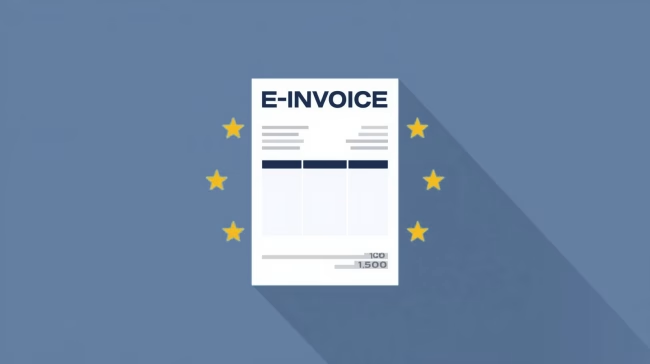
the Validation An electronic invoice is the automated verification of the invoice file against the fixed rules of the European standard EN 16931 and the German one XInvoice. If a required field is missing, validation fails.
The BMF distinguishes three error classes (BMF letter 2025, paragraphs 6a, 6b and 35a). A format error means that no e-invoice is available. In the case of a business rule error, the e-invoice remains in effect. If it affects other content, such as the buyer reference (BT-10), it is immaterial from a sales tax perspective. A content error concerns the mandatory information requirements under §§ 14(4) and 14a of the Value Added Tax Act and makes the invoice not compliant with the regulations. A content error can also exist without validation errors, for example in the case of an incorrect tax rate.
There is no legal requirement for validation. However, the BMF recommends validating e-invoices at the time of creation and dispatch. Validation does not replace the recipient’s obligation to verify the invoice’s completeness and accuracy. It supports the recipient in this. Anyone who uses a suitable validation application with the diligence of a diligent merchant may rely on its results. Keep a copy of the validation report (UStAE 14.5, paragraph 1). The BMF does not recommend a specific tool.
In the SAP Business One context
The E-invoicing check in the Versino Financial Suite checks the data in SAP Business One, not the finished product. XML-file. Therefore, it does not replace validation. Whether the format mapping correctly translates special cases such as discounts or head discounts across multiple tax rates is only shown by the validation of a real test invoice. The check ensures that this validation does not fail at previously recognizable data gaps.
Legal status: MF Treasury letter 2025, MF Treasury FAQ as of March 2026. Module status: E-Invoicing Check Version 1.0.

E-Invoice check by Versino Financial Suite
Webinar E-Invoice Final Rush

E-Invoicing 2026: What is changing now for SMEs and SAP B1 users
E-Invoicing 2026: From Receipt to Mandatory Issuance — what SMEs must clarify now

E-invoicing in Europe: Harmonised standard and national fragmentation

E-invoicing in SMEs: The clock is ticking

France E-invoicing 2026: What companies with a French tax number need to know now

Service description in the e-invoice: How much detail really needs to be included?
Verifactu in Spain: the new invoicing obligation