Financial closing is often a nightmare for SMEs: error-prone processes, time pressure and inaccurate data. But why is this the case? And how can companies overcome these challenges? In this article, we take a look at the five biggest problems with financial closing and show how modern ERP software how SAP Business One can help.
What is a financial statement?

The financial statements are a recurring process in which all of a company's financial activities are recorded, analysed and summarised in reports. These reports - such as the balance sheet, income statement and cash flow statement - provide a detailed overview of the company's financial position. They are not only important for internal decisions, but also for external stakeholders such as investors and shareholders.
But why is this process so complex? Quite simply, it comprises a large number of steps, from the recording of Transactions to consolidation of data from different departments. And this is where the problems begin.
Financial close vs. closing the books: what's the difference?
The terms "financial closing" and "closing the books" are often used interchangeably. But there is a crucial difference:
- Financial statementsA generic term that covers all processes that lead to the preparation of financial reports. This also includes closing the books.
- Closing the booksA specific step in the financial closing process in which the general ledger is closed for a specific period.
Why is this distinction important? Because it shows that the financial close is more than just closing the books - it is a comprehensive process that requires structure, precision and often technological support.

The steps in the financial close process
The financial closing process can be divided into five main steps:
- RecordingAll financial transactions are recognised, including assets, liabilities and income.
- analysisThe data is analysed, compared and checked for errors.
- ClosingThe books are closed and all transactions are finalised.
- consolidationData from different departments or subsidiaries are merged.
- ReportFinancial reports are prepared and forwarded to stakeholders.
Each of these steps harbours challenges - especially for SMEs, which often work with limited resources.
The five biggest challenges in the financial close
1. lack of structure and SOPs
Many medium-sized companies do not have formalised standard operating procedures (SOPs) for financial closing. This leads to inconsistencies and consequently errors, especially as the company grows. Without clear processes, closing becomes a chaotic endeavour.
2. time pressure for monthly closings
The pressure to close deals quickly often leads to mistakes. As a result, employees take shortcuts and important information is lost. In concrete terms, this means inaccurate reports that also hinder decision-making.

3. inaccurate and delayed financial data
Incorrect or incomplete data from one department can delay the entire closing process. Fast-growing companies in particular often lack consistent procedures for financial reporting.
4. isolated information and poor integration
Data from different departments is often available in different formats. This makes consolidation more difficult and leads to manual, error-prone processes.
5. lack of automation in accounting
Many companies cling to manual processes even though they are no longer scalable. Without automation, the accounting This is creating a bottleneck that is slowing down the company's growth.
ERP software as a solution: How SAP Business One can help
Modern ERP systems such as SAP Business One offer solutions to many of these challenges. They can significantly simplify the financial closing process through automation and integration:
- Structured processesSAP Business One enables the introduction of standard operating procedures (SOPs) and ensures consistency.
- time savingAutomated processes reduce the time required to close the books.
- data integrationAll financial data is consolidated in one system, which minimises errors and speeds up reporting.
- Real-time reports: With powerful reporting tools, companies can access up-to-date financial data at any time.
Feasible and optimisable
Yes - financial closing is a complex process that poses major challenges for medium-sized companies. On the other hand, with the right technology - such as SAP Business One - these challenges can be overcome. Automation, integration, structured processes and appropriate training are the key to efficient and reliable financial closing.

Experience liquidity planning in SAP Business One live: The webinars on the new Versino Financial Suite

Financial chat for SAP Business One: How he answers questions about numbers and when he prefers not to answer

Versino Financial Suite Major Release: End of the SAP window cage
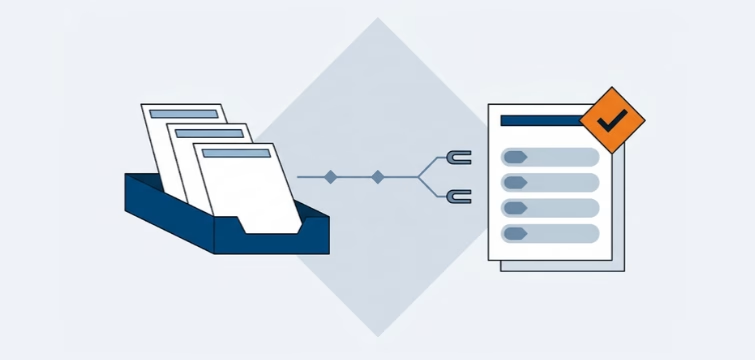
Account statement processing: What the Versino Financial Suite will offer in the future — a preview of accounting
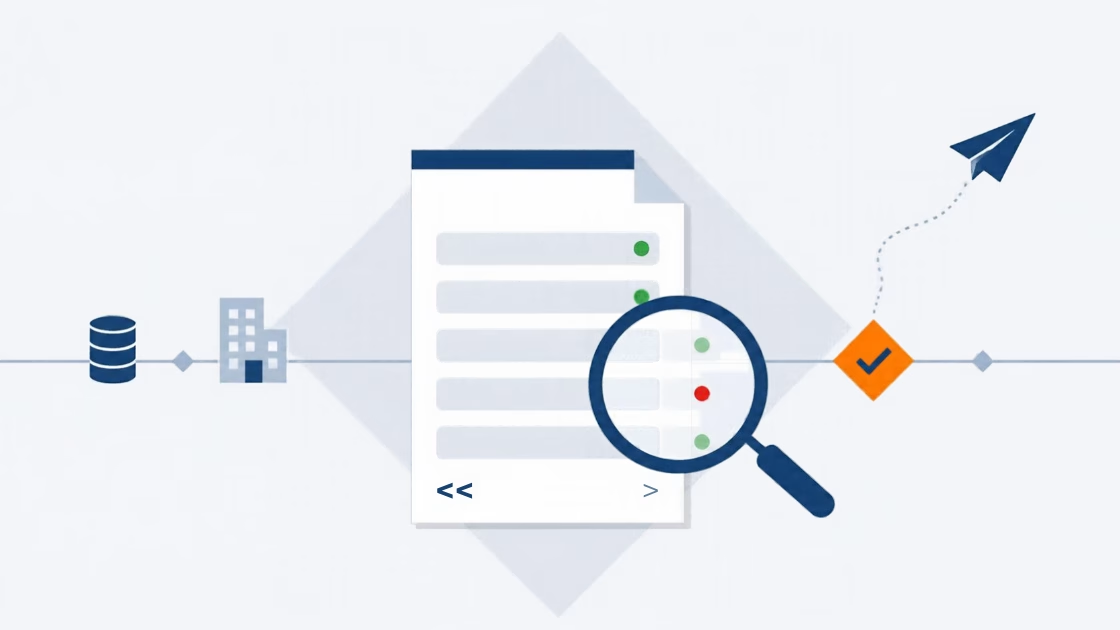
E-Invoice check by Versino Financial Suite